4 min read
A common mineral supplement eliminates "zombie" cells and extends the lifespan of mice
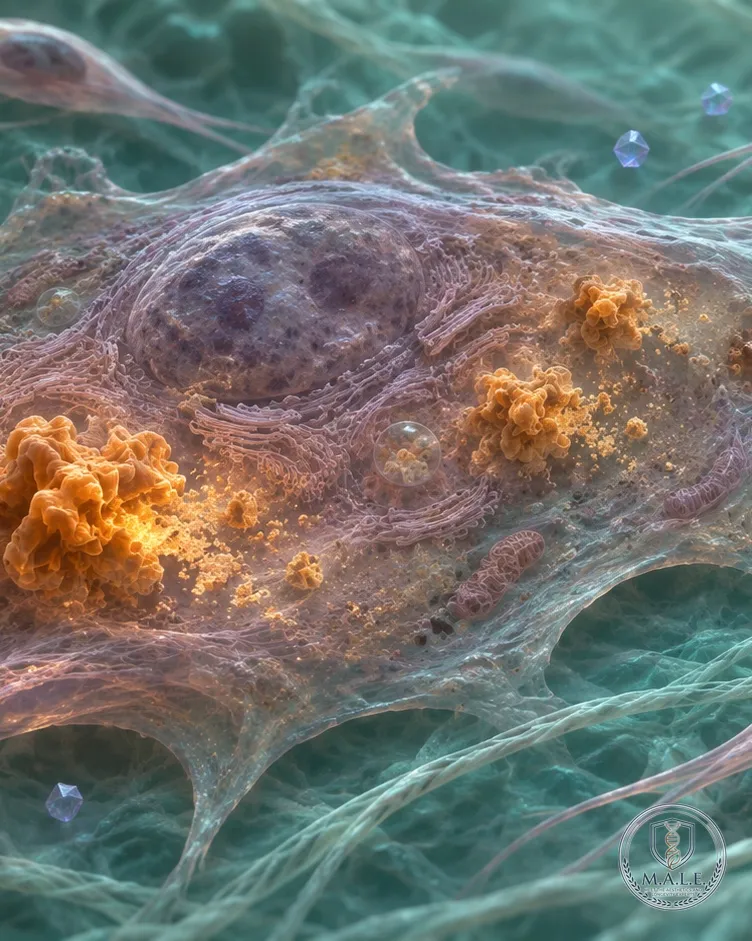
An over-the-counter mineral supplement, vanadyl sulfate, has proven to be an unexpected senolytic in the laboratory: it selectively eliminates senescent cells, the so-called "zombie cells," and extended the lifespan of old mice by about 7%. The study, conducted at the University of Chicago, was published on November 6, 2026, in Nature Aging. The result is intriguing but comes from cell cultures and mice, not humans.
What the Researchers Discovered
The team led by Jing Chen and Chuan He tested a library of "blood nutrients," molecules from diet and supplements that circulate stably in the body, expanded with 68 common dietary supplements. They searched for compounds that kill human senescent fibroblasts without affecting normal fibroblasts. Vanadyl sulfate (VOSO4), a form of vanadium, a mineral present in small amounts in seafood, mushrooms, and soy, ranked first.
How It Works
Senescent cells have a chemical vulnerability described now for the first time: the reactivity of cysteine groups in their proteins is globally reduced, and their reducing capacity is weakened (less glutathione reductase, accumulation of oxidized glutathione). At the same time, they overstrain their protein folding mechanisms in the endoplasmic reticulum (ERO1α and the PDI family). Vanadyl sulfate, a mild oxidant, disrupts disulfide bond formation, causing proteins to misfold and aggregate, leading to the death of the senescent cell. Young cells have enough reducing reserve to withstand.
Results in Animals
- Old mice (76 weeks) treated for 4 weeks showed fewer senescence markers (p16, IL-1β, IL-6) in the kidneys, better physical endurance, improved insulin sensitivity, and better liver and kidney function.
- In a longevity experiment on males (19 treated, 20 controls), 3 months of vanadyl in drinking water increased median survival from 886.5 to 952 days, about 7%.
- Females had similar health benefits, but lifespan was not tested in them.
- The supplement also improved models of diabetes, liver fibrosis (NASH), atherosclerosis, and lung fibrosis.
- In human liver tissue from elderly donors, cysteine reactivity was also reduced, suggesting that the vulnerability exists in humans too.
Why It Matters for Clinical Practice
Senescent cells are one of the main targets of longevity medicine, and in the skin, senescent fibroblasts contribute to collagen loss and chronic background inflammation. The study introduces two new things: a senolytic mechanism different from known ones (dasatinib with quercetin, fisetin) and the idea that a cheap compound, already used in humans, could be repurposed. The authors note that the effect allows for "pulsed" administration, over short periods, not continuously.
"If you eliminate senescent cells, you make room and capacity for new cells to replace them and improve overall health." (Jing Chen, University of Chicago)
Study Limitations
- All efficacy data are from cell cultures and mice; there is no clinical study of vanadyl as a senolytic in humans.
- The longevity experiment was small and only on males.
- Excessive exposure to vanadium has known toxic effects (including on lung function); the useful and safe dose in humans is not established. The study does not justify recommending the supplement to patients.
- The skin was not studied in vivo.
- One of the lead authors is an inventor on a patent application for vanadyl sulfate compositions against age-related diseases.
The team is now working on new, more potent formulations for other animal models and eventually clinical studies. Senolytics and new targets of cellular aging are exactly the type of subject that physicians interested in longevity will follow in the coming years, including at M.A.L.E.
Sources
- Original paper: Wu R., Yang F., Li J. et al. (correspondents: Jiacheng Li, Chuan He, Jing Chen), "Altered protein cysteine reactivity in senescent cells is a vulnerability for senolysis to ameliorate aging", Nature Aging, November 6, 2026. DOI: 10.1038/s43587-026-01253-5
- PubMed record (PMID 42995257): pubmed.ncbi.nlm.nih.gov/42995257
- University of Chicago Biological Sciences Division press release: "Study finds that common supplement fights aging and age-related disease in mice", November 6, 2026. biologicalsciences.uchicago.edu